Dengan Nama Allah yang Maha Pemurah lagi Maha Pengasihani
Assalamualaikum,
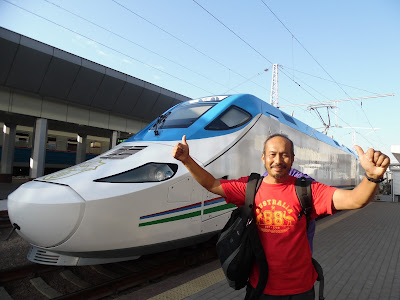
Samarkand - 3J perjalanan dengan keretapi daripada Bukhara. Tambang ialah USD 20 untuk perjalanan siang kelas dua. Merentasi padang pasir tandus dengan berlatar belakangkan, gunung, kawasan ternakan,
 |
| Bukhara Train Station |
perkampungan, tasik dan sungai-sungai kecil. Sekali sekala keretapi berhenti, menurun dan menaikan penumpang. Rumah-rumah tanah liat dan pokok-pokok buah-buahan dimana-mana dikawasan-kawasan perumahan. Seperti epal, anggor, rock water melon, tembikai dan sebagainya.
Ternakan bebiri, kuda disepanjang perjalanan, samaada dalam kumpulan yang besar dan kecil. Jam 12.30pm ZBA sampai di Samarkhand. Cuaca agak panas tetapi tiupan angin sejuk menyebabkan cuaca berada disekitar 18C.
 |
| Perjalanan Keretapi Bukhara ke Samarkhand |
Stesyen keretapi berada dipinggir bandar dan terletak 3 km ke pusat bandar lama Samarkhand. Bus dan teksi adalah pengangkutan utama tetapi daripada bandar lama ke lokasi tumpuan pelancung cuma dalam jarak berjalan kaki.
Samarkhand– the second greatest city of Uzbekistan, the center of Samarkand region. In ancient times city was called as Marakand – capital of tiap Sogdiana. The origin of the name of the city is still unknown. It is supposed that the word
“Samar” is a nakhandme of one conqueror, and prefix “kand” means “the city”, “settlement”. Abu-Raykhan Beruni and Makhmud Kashgari, great scholars of XI century, held opinion that etymology of the word “Samarkand” came
 |
| World song festival Samarkhad 2015 |
from “semizkent” – “rich population”. In 2001, Samarkand was enlisted into the World Heritage List of UNESCO. In 2008, Uzbek astronomers discovered small planet with the period of circulation around the Sun about four years and in 2010 it was officially
included into the International Catalogue of small planets under the number 210271, — this planet was called as “Samarkand”.
Population is 366 thousand people — Tajiks, Uzbeks, Russian, Jewish and Iranians.
 Official age of the city is 2700 years beginning from the first mentioning in the historical chronicles in 329 BC. But by that time, in the period when Alexander Makedonskiy conquered Samarkand, the city was well strengthened and had rich population, that’s why; it is supposed that the city is older enough. Excavations in the territory of Samarkand certify that from time immemorial people lived in this place thanks to its extremely beneficial geographical location, fresh climate and water source – it was an ideal place for living. Many parts of Avesto, ancient book of Zaroastrians were written in the territory of Samarkand.
 Samarkand, and despite the period of obscurantism the city preserved monuments of architecture of various religions. Modern Samarkand treats the representatives of various confessions with care. Besides traditional mosques there are 4 Orthodox churches, 1 Catholic Cathedral, 2 synagogues, 1
Buddhist temple, and prayers-houses of various religion currents. Samarkand, one of the most important geographic key points of Great Silk Road, imbibed many cultures, traditions and art, gathered the most leading masters of the Middle Age. All these were transformed in the
amazing and beautiful monuments of architecture, which still admire the people. When Europe waded through mud on the streets of its cities, Samarkand was paved with stones. Before invasion of Genghizhan people of Samarkand used water supply system while the source of water in many European cities was still the well.
Samarkand, and despite the period of obscurantism the city preserved monuments of architecture of various religions. Modern Samarkand treats the representatives of various confessions with care. Besides traditional mosques there are 4 Orthodox churches, 1 Catholic Cathedral, 2 synagogues, 1
Buddhist temple, and prayers-houses of various religion currents. Samarkand, one of the most important geographic key points of Great Silk Road, imbibed many cultures, traditions and art, gathered the most leading masters of the Middle Age. All these were transformed in the
amazing and beautiful monuments of architecture, which still admire the people. When Europe waded through mud on the streets of its cities, Samarkand was paved with stones. Before invasion of Genghizhan people of Samarkand used water supply system while the source of water in many European cities was still the well.

Samarkand is the city of legend, and its stones and walls are like live pages of history, which can be looked through endlessly. Name of Samarkand is connected with the greatest scholars and poets of the Middle Age as Rudakiy, Alisher Navoi, Jamiy, Zahiri Samarkandiy, Ulugbek, Omar Khayam, Avicenna, Rumiy, Beruniy and many others who lighted up the city to all around the world.
 |
| Registan Square (Pearl of Central Asia) |

 |
Bibi Khonym Mosque
Samarkhan. Tidak ada metro. Bas kontot - kontot dengan manusia bergayutan. Teksi, sebagaimana pembaca sedia maklum. Cekek darah. Penginapan tidak berapa sukar tetapi agak mahal jika dibandingkan standard mereka dengan negara-negara lain.
Sebagai makluman, semua hotel-hotel di Uzbekistan kena "sign in" dan ambil resip sebelum keluar daripada hotel. Ini bertujuan untuk pemeriksaan pihak Imigresen sebelum meninggalkan Uzbekistan.
Berbalik kepada lokasi yang menjadi tumpuan ramai, sebenarnya berada dalam lingkungan 3-4 km berjalan kaki. Itu pun terpulang kepada jarak hotel penginapan. Jika sekiranya kita berada didaerah Reghistan bermakna kita berada di pusat bandar Samarkhand. Tiada masalah untuk berjalan kaki kemana sahaja. Walau bagaimana pun kepada sesiapa yang berhajat untuk mengunjungi Makam Al-Iman
Muhammad Ismail Bukhari (Imam Bukhari) perlu menyewa teksi sekitar USD 15 pulang pergi kerana lokasi makam tersebut berada 41 km di luar bandar Samarkhand. Terdapat juga bas awam tetapi sukar untuk menentukan waktu perjalanan dan pertukaran bas dalam perjalanan.
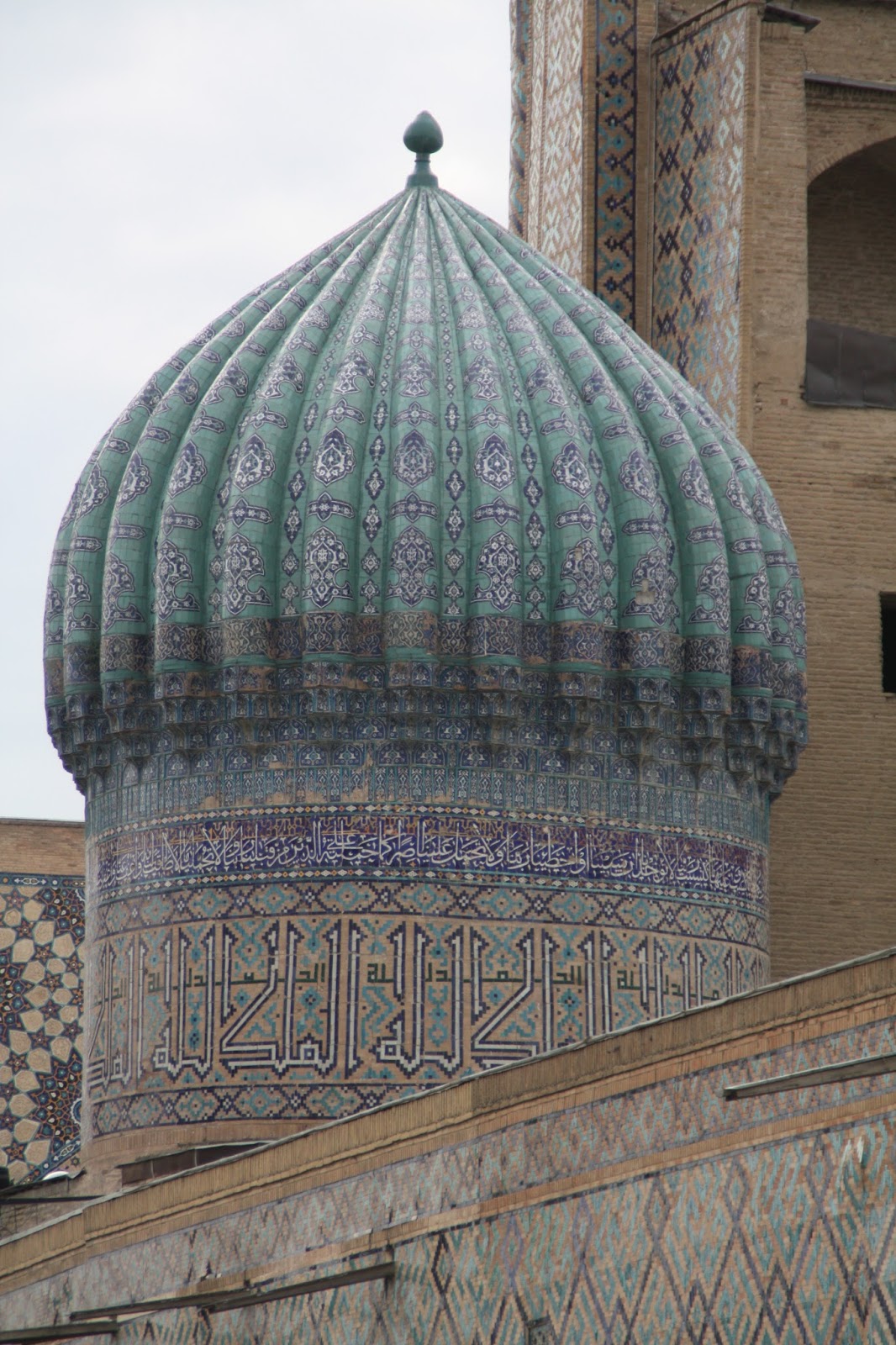
Daerah Reghistan, terletaknya satu khazanah ternilai di Samarkhand dikenali sebagai "Madrassah Tilly-Kori". Amat cantik sekali seni bina bangunan berkenaan. Kagum dengan seni bina zaman dahulu kala malah tidak
luntur dek cuaca walau pun sudah ratusan tahun. Bangga dengan kekuatan dan penyebaran Islam dikala itu. Tapi sayang setelah penjajahan puluhan tahun oleh Rusia keatas Uzbekistan, tanda-tanda kebangkitan semula Islam samar-samar dengan pengaroh modenisasi sekarang.
Perjalanan masih jauh. ZBA meninggalkan Samarkhand dalam kenangan yang sukar dilupakan sebagai seorang Muslim. Bandar ini diterokai selama 3H/2M dan perjalanan seterunya ialah Tashkent. Seawal jam 0100 am, perlahan-lahan keretapi malam tempat tidur bergerak menembusi cuaca sejuk dengan dengkuran keletihan menamatkan episod cerita berkenaan "Stone Fort" yang bersejarah.
THANK YOU FOR THE PEOPLE OF
SAMARKHAND
|

 Ternakan bebiri, kuda disepanjang perjalanan, samaada dalam kumpulan yang besar dan kecil. Jam 12.30pm ZBA sampai di Samarkhand. Cuaca agak panas tetapi tiupan angin sejuk menyebabkan cuaca berada disekitar 18C.
  Stesyen keretapi berada dipinggir bandar dan terletak 3 km ke pusat bandar lama Samarkhand. Bus dan teksi adalah pengangkutan utama tetapi daripada bandar lama ke lokasi tumpuan pelancung cuma dalam jarak berjalan kaki.
  Samarkhand– the second greatest city of Uzbekistan, the center of Samarkand region. In ancient times city was called as Marakand – capital of tiap Sogdiana. The origin of the name of the city is still unknown. It is supposed that the word
  “Samar” is a nakhandme of one conqueror, and prefix “kand” means “the city”, “settlement”. Abu-Raykhan Beruni and Makhmud Kashgari, great scholars of XI century, held opinion that etymology of the word “Samarkand” came
  included into the International Catalogue of small planets under the number 210271, — this planet was called as “Samarkand”.


 Official age of the city is 2700 years beginning from the first mentioning in the historical chronicles in 329 BC. But by that time, in the period when Alexander Makedonskiy conquered Samarkand, the city was well strengthened and had rich population, that’s why; it is supposed that the city is older enough. Excavations in the territory of Samarkand certify that from time immemorial people lived in this place thanks to its extremely beneficial geographical location, fresh climate and water source – it was an ideal place for living. Many parts of Avesto, ancient book of Zaroastrians were written in the territory of Samarkand.
 Samarkand, and despite the period of obscurantism the city preserved monuments of architecture of various religions. Modern Samarkand treats the representatives of various confessions with care. Besides traditional mosques there are 4 Orthodox churches, 1 Catholic Cathedral, 2 synagogues, 1